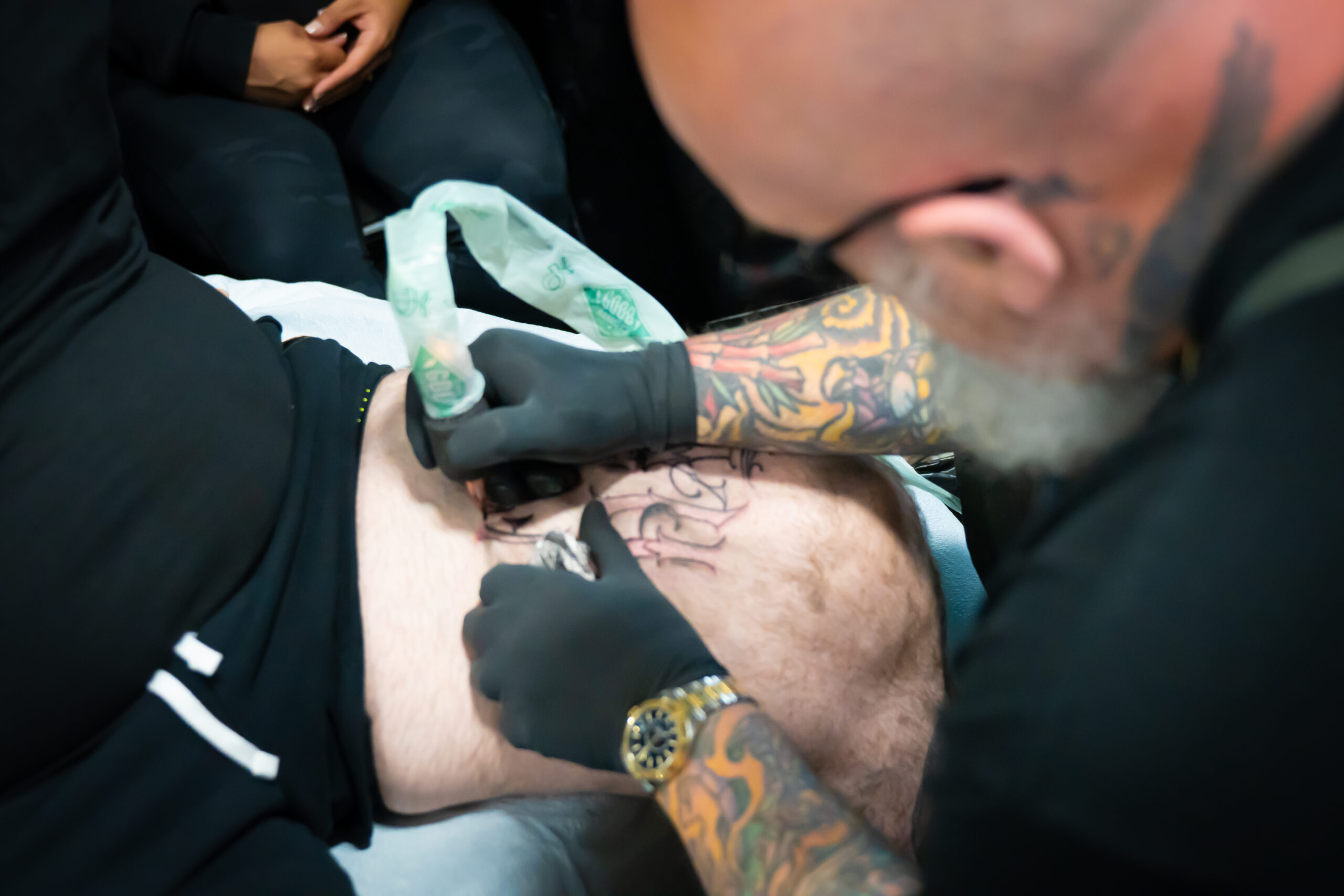
“When you’re just 140 lbs and you’re tattooing years ago down the Bowery as a little kid, they have no respect for you. I had a big guy come in and punch me in the stomach and said, “Now do a good job kid” So I had to even the score when someone does that. What would you do? Turn around and tattoo someone who just punched you? I had a Ball-peen hammer, and I hit him right in his forehead-I mean real hard too. My father came over and said “what are you doing?” and put a blood stopper on him. The guy apologized to me. I tattooed him and he gave me a tip“
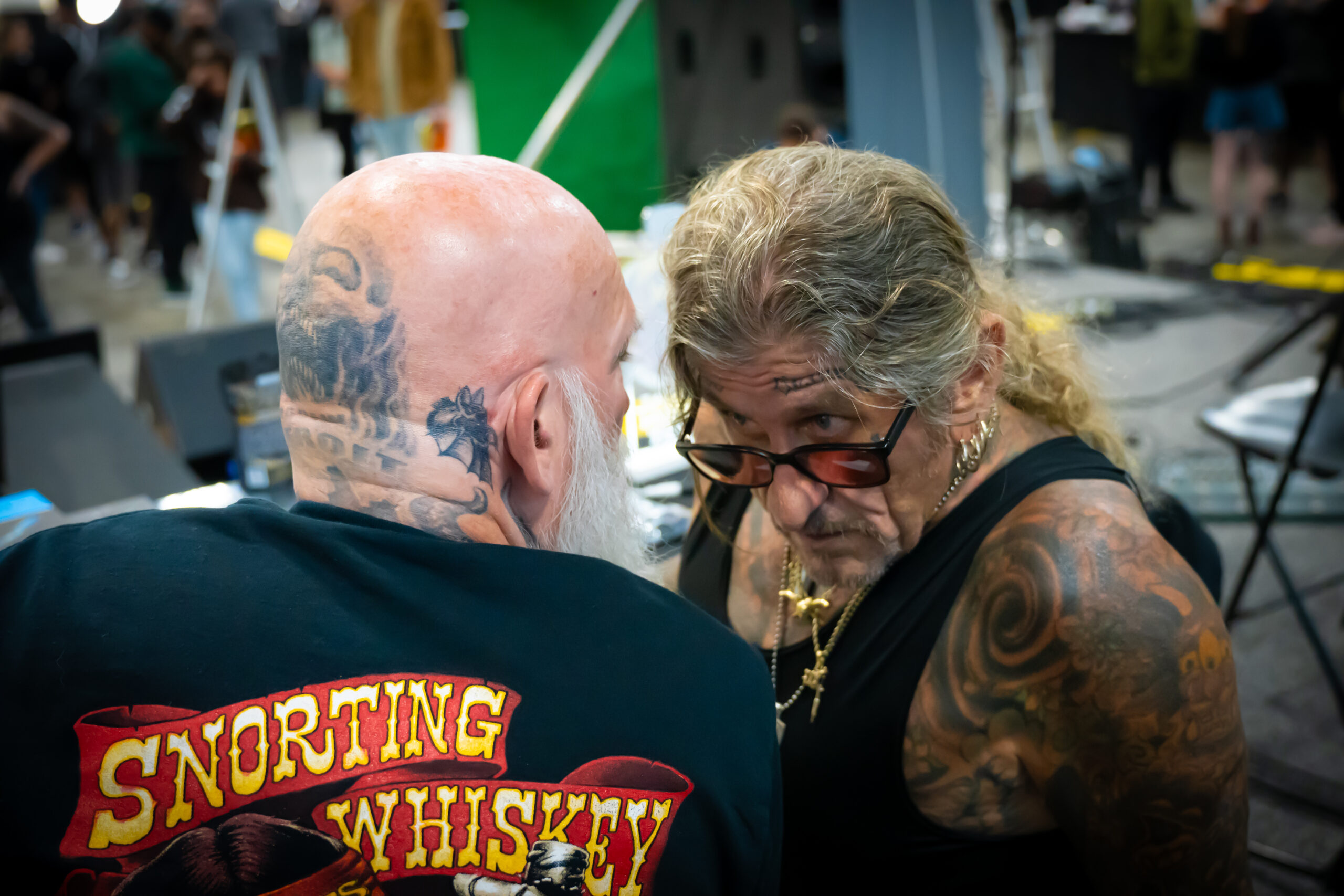
Bowery Stan is the last man standing from the days of the Bowery. Little did he know at the time of his hey day that he and his Ball-Peen hammer clinched in hand would become Legend. Used as his weapon of choice for protection on Skid Row, his hammer is synonymous with his name.
At 77 years old, Bowery Stan is still bullish and rough around the edges. Yet, his words are covered in honey when he talks about his days on the Bowery. It is only a dream now, whatever images are left in his mind are what we will get to experience. He is eager to share stories from Skid Row. He was there from the beginning, after all, and Stan wants the world to know the made-for-the-movies characters who kick started the tattoo business. Most importantly, he wants to share the story of how tattoo ink really came to be.
After Stan got into some trouble with the law at 12 years old, a man called Jonesy urged his business partner (who also happened to be Stan’s father) to “make a tattooer out of him” They figured this was the best way they could keep an eye on Stan. With a fifth grade education Stan quit school and began practicing on the bums roaming around under the Third Avenue “L” train that covered the Bowery.
“It was mostly alcoholics there at that time. Bums, drunks, seamen who jumped ship. It was great down there” The Bowery was the stretch from Houston Street to Canal Street that provided refuge to these undesirables–men who wanted to hide from society.
The way Bowery Stan tells it Jonesy was the backbone of the tattoo business. An unsung hero of sorts who many tattoo historians have overlooked, misnamed, or completely left out of their (sometimes fabricated) tales. “Usually if a guy landed on the Bowery he was an alcoholic and he smoked, but not Jonesy” Word on the street was he got his heart broken something awful back in Pennsylvania and came to the Bowery to forget.
Jonesy was an honest man and hard of hearing. A genius of sorts who made his own hearing aids, could fix anything you gave him (“he could fix your car, he could fix your toaster”), made his own tattooing machines,and at one time would be the supplier to everyone in the tattoo world.
When Stan started tattooing in his father’s barber shop at Number 4 Bowery, Jonesy kept a watchful eye.
It was 1948, and the only colors available to tattooists were the bare minimum that came from Fezandie & Sperrle Inc. on Fulton Street. These were barrels of color that artists used for their paintings,and mostly used for painting cement. Black (carbon based), Green (“pea green” as Stan calls it),Brown (Iron oxides) and Red–which, according to Stan was mercurial and would “blow up in some of the guy’s’arms” (By the late 50’s they had found a safer red free of mercury).
New colors were something to be coveted. Blues and yellows existed only in their imagination. They worked day and night tattooing on the Bowery. They made their own needles,cut their own springs,and tattooed what Bowery Stan calls the “scum of the earth”.
In the mid 50’s they got exciting news.Jonesy had an “in” at the DuPont chemical factory and word was out that he had found the “most beautiful blue they had ever seen” Soon, Stan could add blue and white (Titanium-based mostly used by artists at the time to mix in with their oil paints) to his ink collection. Eventually a safe yellow also came out of their secret weapon at DuPont.
By 1960 tattooing had all the colors that could make every color of the rainbow: black, brown, red, green, blue, yellow, white-and by mixing the green and yellow they came up with a beautiful “Irish Green.” This was a big time accomplishment. Bowery Stan proudly claims that all of these colors sprouted only from the Bowery.
Stan went on to open S&W Tattooing with his brother. There, they supplied the tattoo world for 40 years. They made the tattooing business possible for guys in the beginning like Crazy Eddie, Spider Web,Coney Island Freddy and beyond.
S&W was majorly successful but not without their own problems of discrimination… When the higher ups in NYC caught wind of two guys making a good living off tattooing, they wanted to put a stop to it.
They forced the brother’s tattooing business out of NYC with violations. They were constantly fighting and could earn no respect from authorities no matter how legit their business was.
Stan and his brother felt compelled to take a stand. With the threat of tattooing being banned in the US, they got the support of a dentist/tattooist (who also happened to be family), doctors, Board of Health officials and the like to testify that tattooing should be kept legal.
Not only did Stan see victory, eventually the joke would be on the very haters that forced them out: Stan and his brother would once again tattoo day and night in New York.
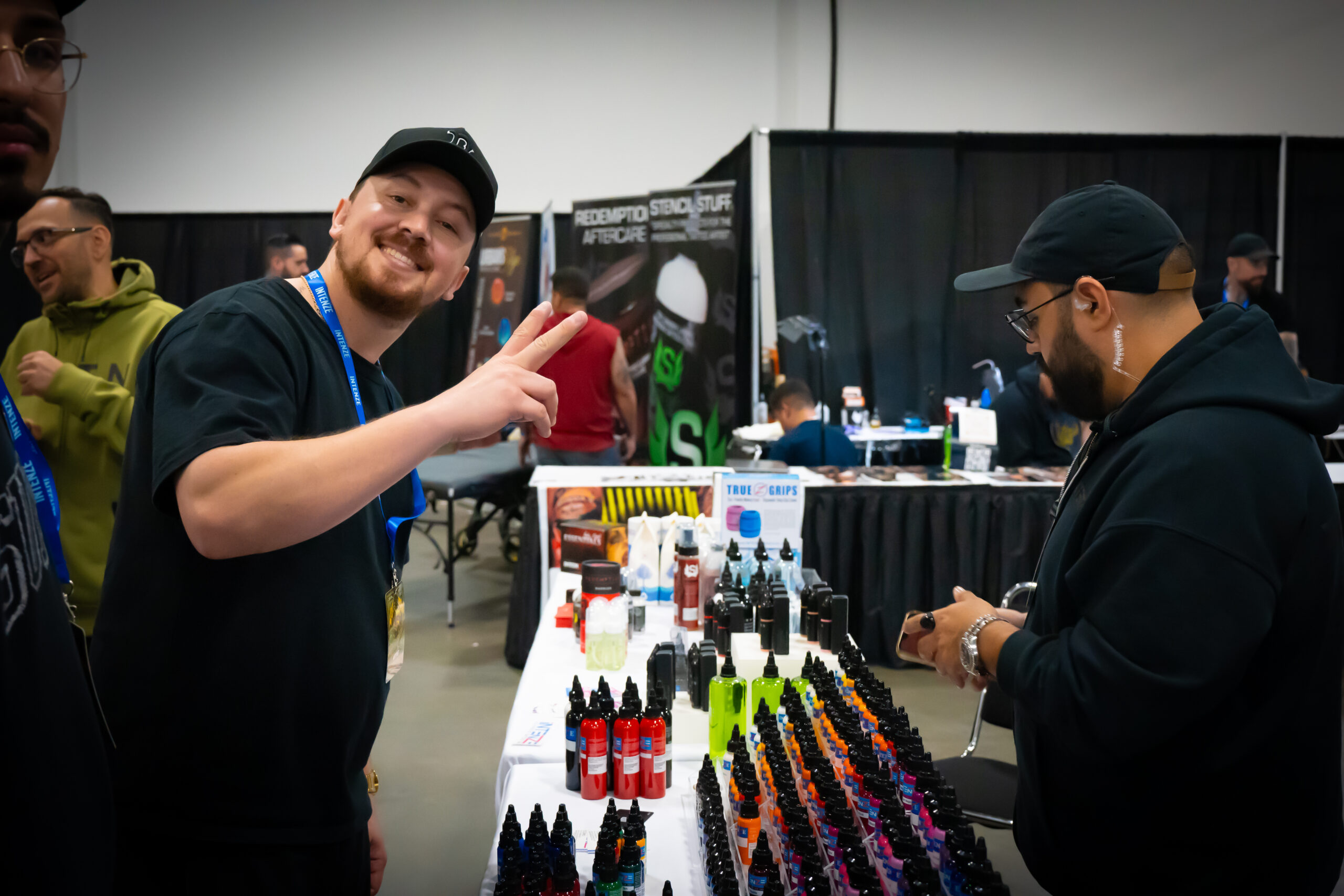
The Ink is the legend that Bowery Stan and his crew left for the tattooists of today and the future.
Bowery Ink is an homage to the countless stories, the blood, sweat and hard work that went into the beginning days of tattooing. In reverence to the old timers-the founding fathers of the tattoo business-Bowery Stan brings his line of vintage colors. The original colors from the Bowery. It is his way of saying “thank you” to his father and Jonesy, and not letting this important and sacred part of tattoo history be erased.
“If you are into tattooing traditional style tattoos-the way we did it on the Bowery-then these are the only colors you should be using.”